
BAULARD Alain
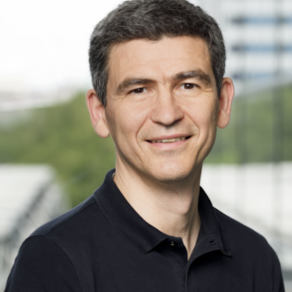
Alain Baulard is Director of Research at INSERM. He holds a PhD in Molecular Biology from the University of Louvain. He did his doctoral work at Institut pasteur de Lille where he pioneered the development of recombinant BCG as a polyvaccine delivery system. In 1996, he joined Patrick Brennan’s laboratory at Colorado State University, focusing on M.tuberculosis cell wall biogenesis. In 1998, he joined Gurdyal Besra’s laboratory at the University of Newcastle, where he studied antibiotic mechanisms targeting the mycobacterial cell wall.
His subsequent work at the Institut Pasteur de Lille unveiled how M.tuberculosis regulates its sensitivity to pro-antibiotics such as ethionamide, isoniazid and pretomanid. This led, in collaboration with Bioversys and GSK,to the development of Alpibectir, which has successfully completed a Phase 2 clinical trials in Cape Town.
Alain serves as the Permanent Secretary of the Mycobacteriology Department of the Société Française de Microbiology (SFM), and as an advisor and grant evaluator for ANRS-MIE since 2020. He leads a team within the IMI-ERA4TB initiative and coordinates the Mustart project, supported by the French « PIA-Investments for the Future » programme. Since 2024, he has been coordinating a Franco-German tuberculosis research initiative between the Deutsches Zentrum für Infektionsforschung (DZIF) and ANRS-MIE. He has been Lecturer at the University of Louvain since 2014.
Abstract: Alpibectir/Ethionamide (AlpE) – The Long and Winding Road to a New Therapeutic Concept
Mycobacterium tuberculosis possesses intrinsic mechanisms to modulate its own antibiotic susceptibility through transcriptional mechanisms. This observation, made during my postdoctoral work nearly three decades ago, initiated a collaborative research program that has recently culminated in the successful completion of a Phase II clinical trial in South Africa with a compound called alpibectir. The mode of action of alpibectir can be compared to that of a computer virus that hijacks the bacterium’s own transcriptional regulatory circuitry, rendering it hypersusceptible to the antitubercular drug ethionamide, including in clinical strains harboring specific resistance determinants against this antibiotic.
This presentation will trace the journey backwards, from today’s success with alpibectir back to the foundational conceptual discovery. I will highlight the key scientific inflection points along the way, including several serendipitous findings that proved pivotal to the project’s trajectory. Beyond the science itself, I will underscore the indispensable role played by multidisciplinary collaborations and the contributions of dedicated colleagues, as well as the critical importance of public–private partnerships in translating a basic mechanistic observation into a therapeutic ambition once considered utopian, today a clinical reality.